Assistants grounded in your documents (RAG)
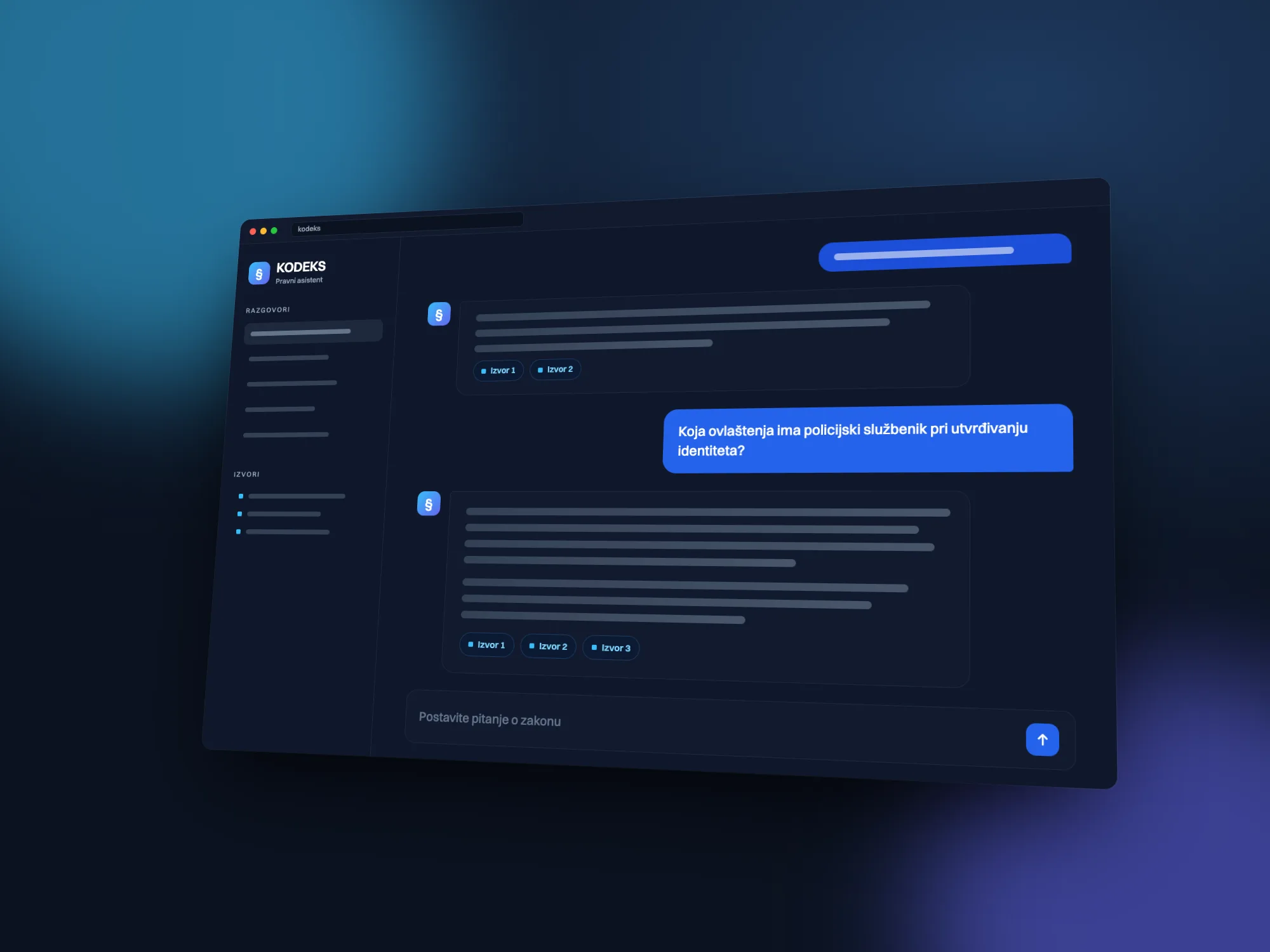
Answers with citations from your policies, manuals, contracts or laws. When the documents do not cover a question, the assistant says so instead of guessing.
Proof: KODEKSI design and build AI features that answer from your own data, show their sources, and fail honestly. I also use AI agents in my own delivery, with every output reviewed by me before it reaches you.
What I build
Answers with citations from your policies, manuals, contracts or laws. When the documents do not cover a question, the assistant says so instead of guessing.
Proof: KODEKSSearch, summaries, classification and drafting, inside your app and behind your existing permissions model, instead of in a separate chatbot.
Learn more about LLM features in existing productsTurning PDFs, emails and forms into structured data and actions, with a human approval step before anything changes.
Learn more about Document and workflow automationIn progress
A support and operations agent over store policies and the catalogue, with human approval before any change to the store.
Learn more about AI for Shopify operationsHow it works
Validate one AI use case on your real data in two weeks. You finish with a working prototype and a clear decision, not a slide deck.
01Days 1 to 2
02Days 3 to 8
03Days 9 to 10
What you get
Scope and price agreed after a call.
Principles
Answers come only from your data, with the sources shown.
Measured before launch, with retrieval and answers checked separately.
A person approves anything that changes data or reaches customers.
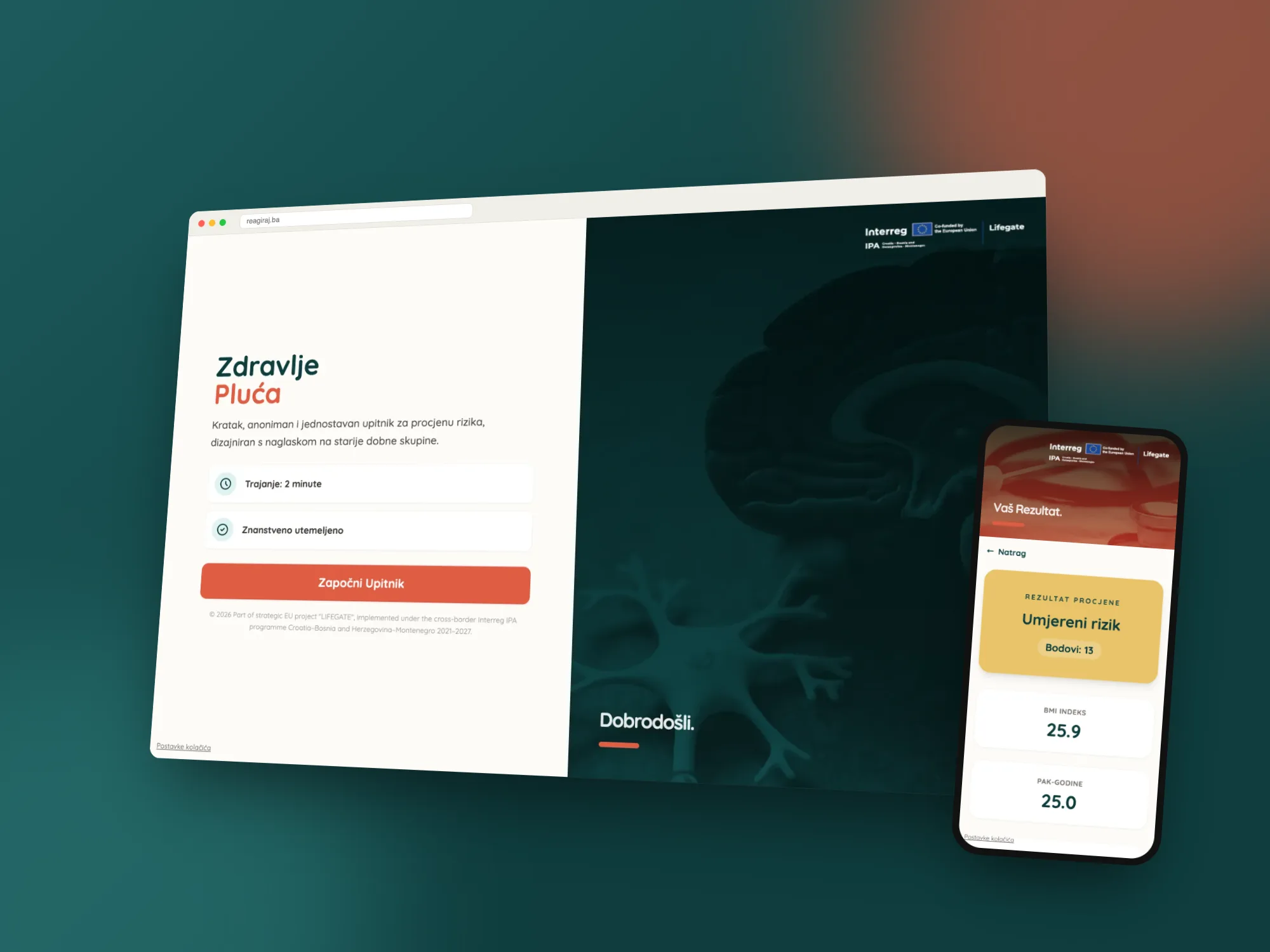
Sensitive data stays out of analytics and third-party training. On reagiraj.ba, the health risk result never reaches GA4.
Proof
I work as one senior engineer with AI agents. They draft, test and document; I decide and review.
AI and cloud
AI engineering (concepts)
Exploring
Not through the way I build. I use the Anthropic and OpenAI APIs under their commercial terms, which state that API inputs and outputs are not used to train their models by default. Your documents and embeddings stay in a database you control, and sensitive data is kept out of analytics.
No. A grounded assistant needs the documents that contain the answers, not a training set. To evaluate it, we agree on a set of real questions your team asks, with the answers they expect.
Every answer shows its sources, so a wrong answer can be checked and traced. Before launch I measure how often it happens on your questions, and anything that changes data or reaches customers goes through a human first.
Yes. It can live behind your login and respect your users' permissions, so people only get answers from documents they are allowed to see.
It depends on usage: the number of questions, the length of the documents retrieved and the model used. The AI Sprint ends with a cost per query estimate based on your real data, before you commit to production.