AI Integration RAG and LLM features
AI integration for companies that want answers from their own documents: RAG assistants with citations, and LLM features inside the products you already have. The two-week AI Sprint tests one use case on your real data before you commit to production.
When AI integration starts to matter
The question is rarely whether AI can do something. It is whether it can do it reliably, on your data, at a cost that makes sense.
Your team searches the same documents every day for the same answers
A chatbot demo looked great, then gave confident wrong answers
You want AI in your product, but your data cannot leave your control
Nobody can say whether the answers are actually good
Support or operations spend hours turning documents into data
You need someone to tell you honestly when not to use AI
What I build
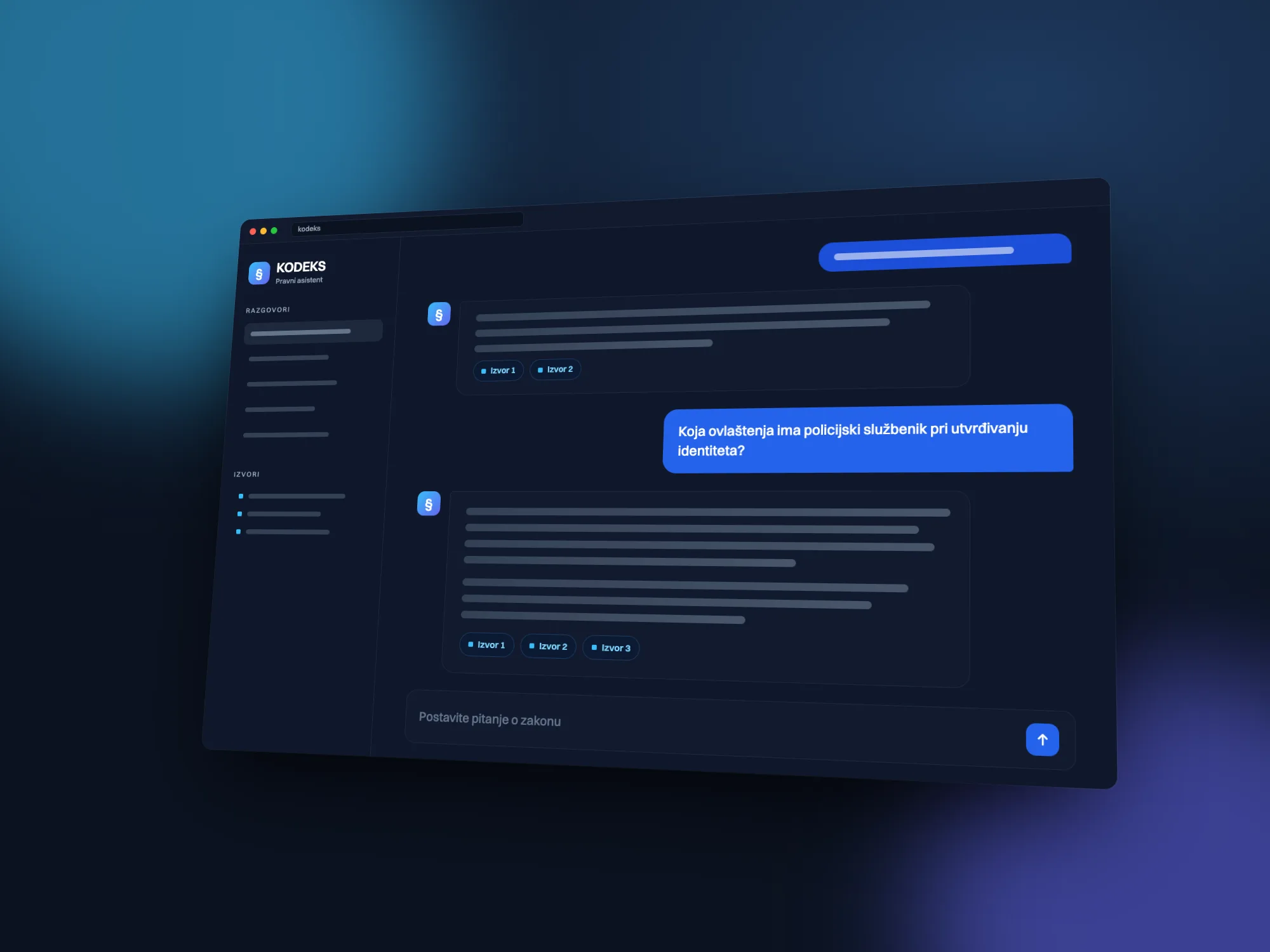
Assistants grounded in your documents (RAG)
- Ingestion and chunking of policies, manuals, contracts or laws
- Vector search with pgvector on PostgreSQL or Supabase
- Answers that cite the passages they used, and say so when the sources do not cover the question
- Multilingual retrieval, including Bosnian, Croatian and Serbian
LLM features in existing products
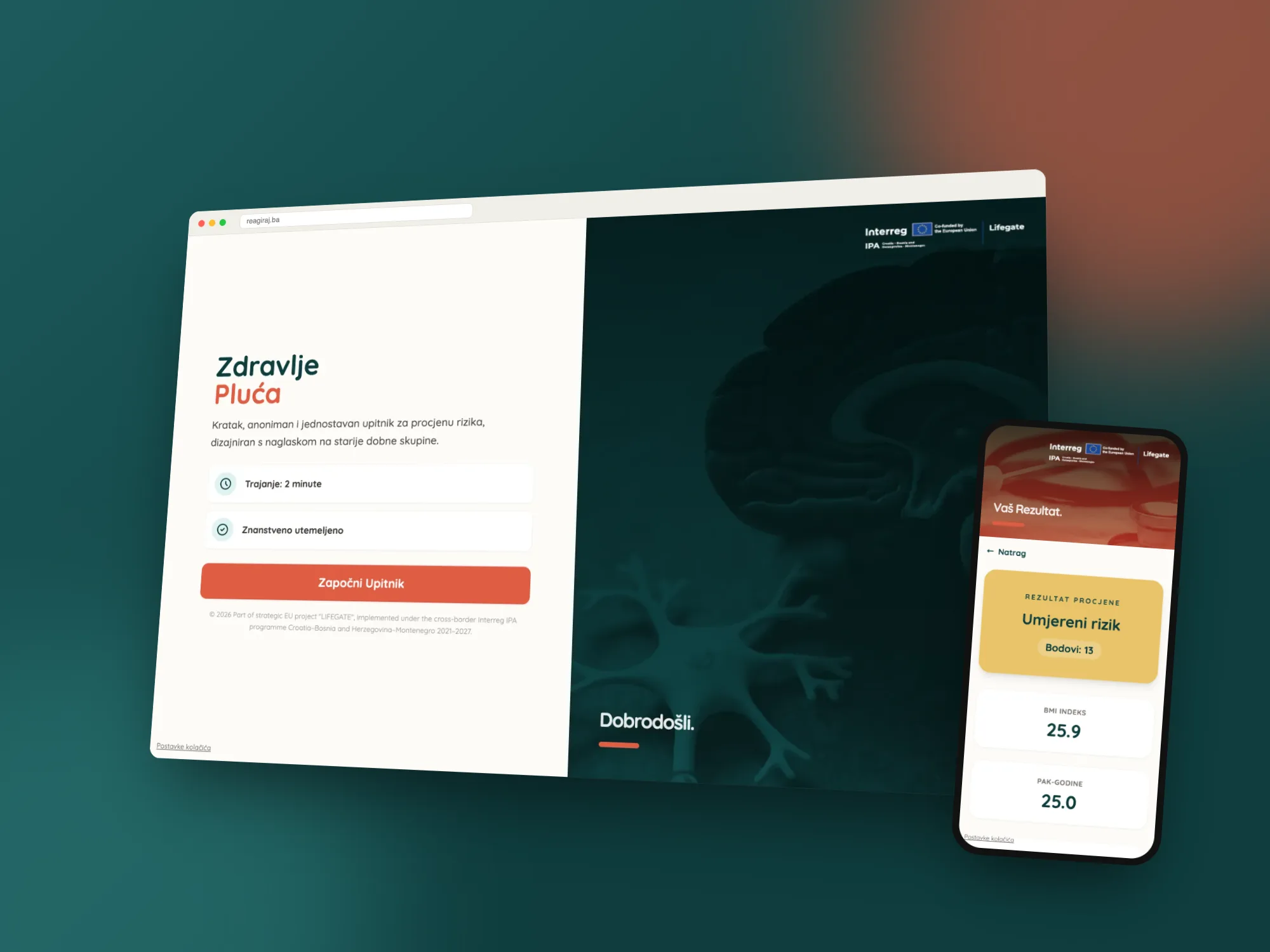
- Search, summaries, classification and drafting inside your app
- Features that respect your existing users, roles and permissions
- Claude and OpenAI APIs, chosen per task
Document and workflow automation
- Turning PDFs, emails and forms into structured data
- A human approval step before anything changes data or reaches customers
Evaluation and cost
- A test set of real questions, agreed with you before building
- Retrieval and answers measured separately, so problems can be found
- A cost per query estimate before production
Typical engagement
Most AI work starts with a two-week AI Sprint: one use case, your real data, a working prototype and an honest go or no-go. If it is a go, the production rollout is scoped from what the Sprint measured.
Ways to work together
Fixed-scope project
Clear deliverables, timeline and price agreed up front.
Monthly retainer
Ongoing improvements, maintenance and support for your store or product.
Embedded engineer
I join your team as a senior contractor through ANODA.
Stack for this service
AI engineeringUsed in production
- Anthropic Claude API
- OpenAI API (embeddings)
- Retrieval-augmented generation (RAG)
- Vector search: pgvector
- Supabase
- Retrieval evaluation
Exploring
- Python and FastAPI
- Agents and tool use
- Model Context Protocol (MCP) servers
- Evaluation frameworks (Ragas, DeepEval)
How I work one senior engineer, a team of agents
I work through ANODA Loop: AI agents draft code, tests and documentation, and I decide, review and sign off. You get one accountable senior engineer, with the throughput of a small team.
Questions about this service
Will our data be used to train AI models?
Not through the way I build. I use the Anthropic and OpenAI APIs under their commercial terms, which state that API inputs and outputs are not used to train their models by default. Documents and embeddings stay in a database you control.
How is this different from the AI page?
This page is about what you can buy: the AI integration service. The AI page explains how I approach AI in general, the principles I follow and the proof behind them.
Can it run inside our existing app?
Yes. Most of the value comes from putting AI where your team already works, behind your existing login and permissions, instead of in a separate chatbot.
What happens when the AI does not know the answer?
It says so. A grounded assistant should answer only from the retrieved sources and tell the user when they do not cover the question. Handling that case well is part of the build, not an afterthought.
Have a project in mind? Let us talk it through.
A short call is the fastest way to find out whether I am the right person for it. If I am not, I will tell you.